
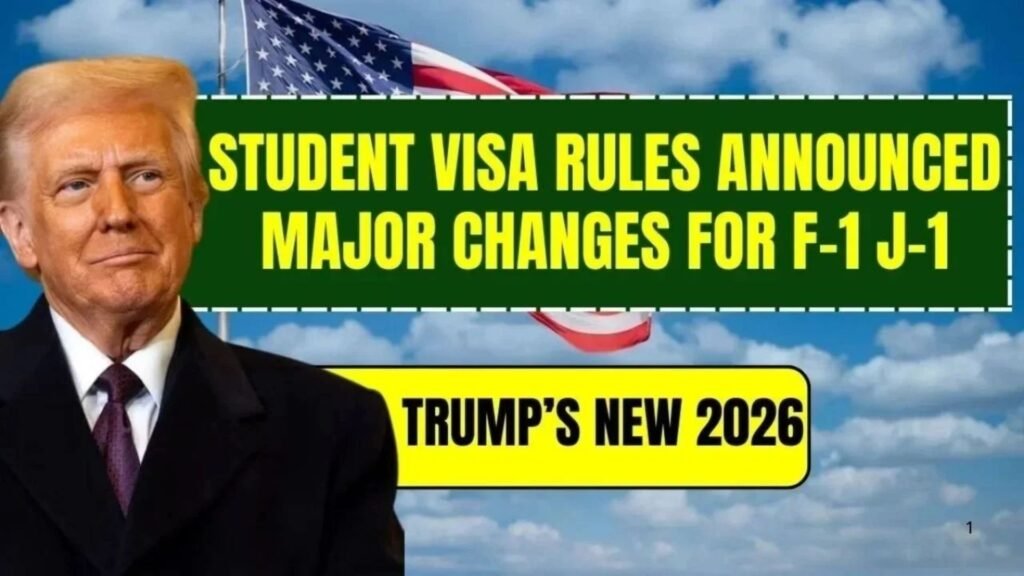
Imagine planning your dream U.S. education, only to hit a four-year wall. That’s the reality for thousands of international students under Trump’s new 2026 student visa rules. These updates to F-1, J-1, and M-1 visas aim to tighten security but could upend grad school dreams and job hunts. Stick around—I’ll break down the chaos, share insider tips, and help you navigate it all.
What Are Trump’s 2026 Student Visa Rules?
Trump’s 2026 student visa rules stem from DHS proposals rolled out in late 2025. They scrap the old “duration of status” perk, swapping it for strict time caps. F-1 academic students, J-1 exchange visitors, and M-1 vocational learners now face fixed stays tied to their program length—max four years.
Gone is the endless flexibility. Extensions? Possible, but expect paperwork headaches.
A Quick History of U.S. Student Visas
Student visas kicked off post-WWII to attract global talent. The “duration of status” rule, born in 1978, let F-1 holders stay as long as they progressed in studies. J-1s focused on exchanges, M-1s on trades.
Trump’s first term eyed restrictions, but 2026 rules ramp it up amid security fears and job protection talks.
Why These F-1, J-1, and M-1 Changes Matter Now
With U.S. universities hooked on international tuition—$45 billion yearly—these rules hit hard. PhD hopefuls in physics average six years; now, they risk status loss mid-thesis. OPT work permits, key for 242,000 students in 2024, face cuts too. It’s a wake-up call for dreamers eyeing America’s edge.
How International Students Can Adapt and Thrive
Beat the clock: Pick shorter programs or build extension cases early. Network via campus advisors for USCIS tips. Consider backups like Canada. These F-1 visa changes 2026 push smarts—plan ahead to turn limits into launches.
Key Stats and Surprising Facts
Over 1 million F-1/J-1/M-1 visas issued yearly pre-2026. But here’s the kicker: 70% of STEM grads stay via OPT—now at risk.
| Visa Type | Old Grace Period | New Grace Period | Max Stay |
|---|---|---|---|
| F-1 | 60 days | 30 days | 4 years |
| J-1 | 30 days | 30 days | 4 years |
| M-1 | 30 days | 30 days | 4 years |
| Pros of New Rules | Cons of New Rules |
|---|---|
| Boosts security vetting | Buries students in fees ($370+ per extension) |
| Protects U.S. jobs | Deters top talent from long PhDs |
Expert Advice for Visa Success
Consult NAFSA pros early. File I-539 extensions 90 days pre-expiry—include med records for delays. Skip risky OPT if non-STEM; eye H-1B lotteries. One advisor quips: “Treat it like a sprint—finish strong, pivot fast.”
Frequently Asked Questions
Will J-1 visa updates 2026 affect postdocs?
Yes—four-year caps could force early exits unless extended.
Can M-1 students extend beyond four years?
Vocational folks need USCIS proof of need; ESL caps at 24 months.
Is OPT dead under these rules?
Not fully—restrictions loom, but STEM extensions might survive challenges.
In wrapping up, Trump’s 2026 student visa rules reshape the American Dream for F-1, J-1, and M-1 crowds. They spotlight security but scream for savvy planning. Key takeaway? Start extensions now, explore options, and don’t let red tape dim your spark. Share this with a study buddy, dive into DHS sites, or comment your worries below—what’s your move?